A family member who professes to be an atheist visited us last year. Before leaving, he asked, “Is there any physical evidence that the Bible is true?” After our recent Bible tour of Saudi Arabia, Jordan, and Israel, I happily shared more “real evidence” with him.
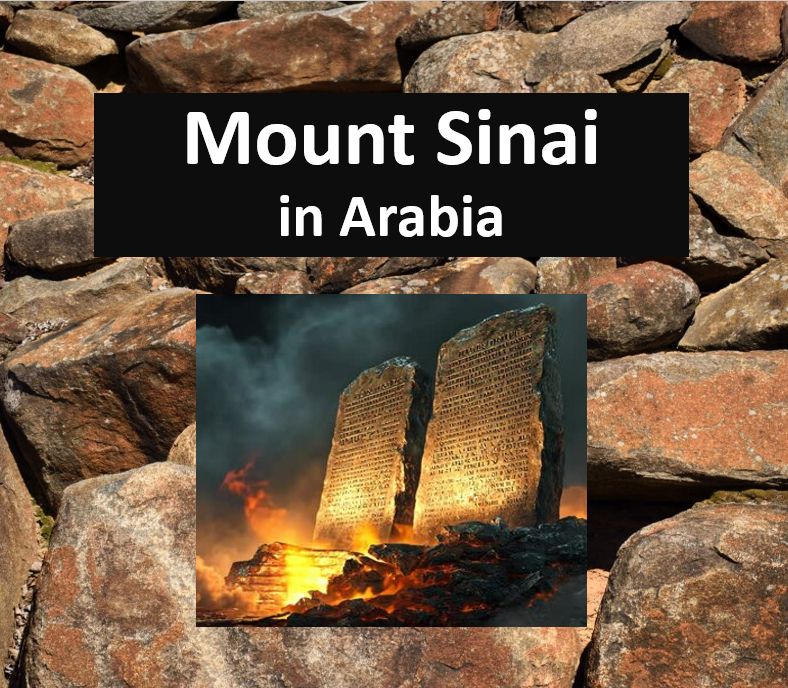
Most people believe that Mount Sinai is on the Sinai Peninsula in Egypt. However, Exodus 19 says that after the children of Israel left the land of Egypt, they came to the Desert of Sinai and camped by the mountain. In Galatians 4:25, Paul wrote that Mount Sinai is in Arabia, not Egypt.
In December, my husband and I went on a Living Passages tour led by Joel Richardson that included the Mount Sinai area in northwest Saudi Arabia. This area was the land of Midian in Moses’ day, where he tended the flock of Jethro, his father-in-law. We visited Jethro’s Caves, from which we could see Mount Sinai.
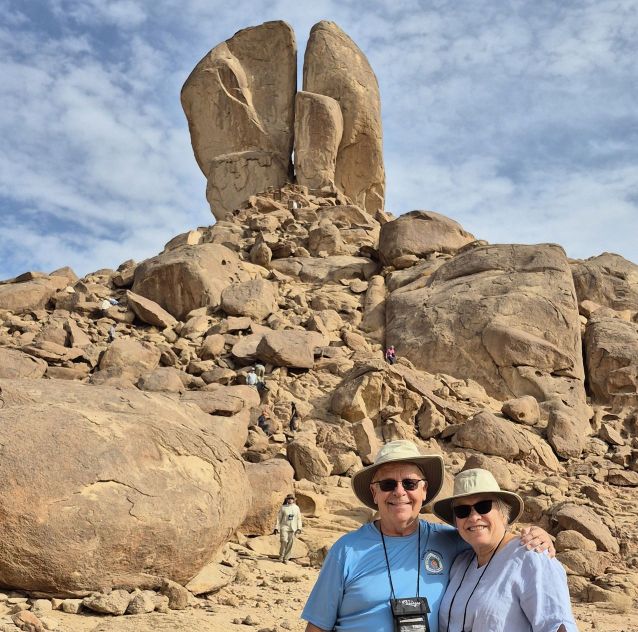
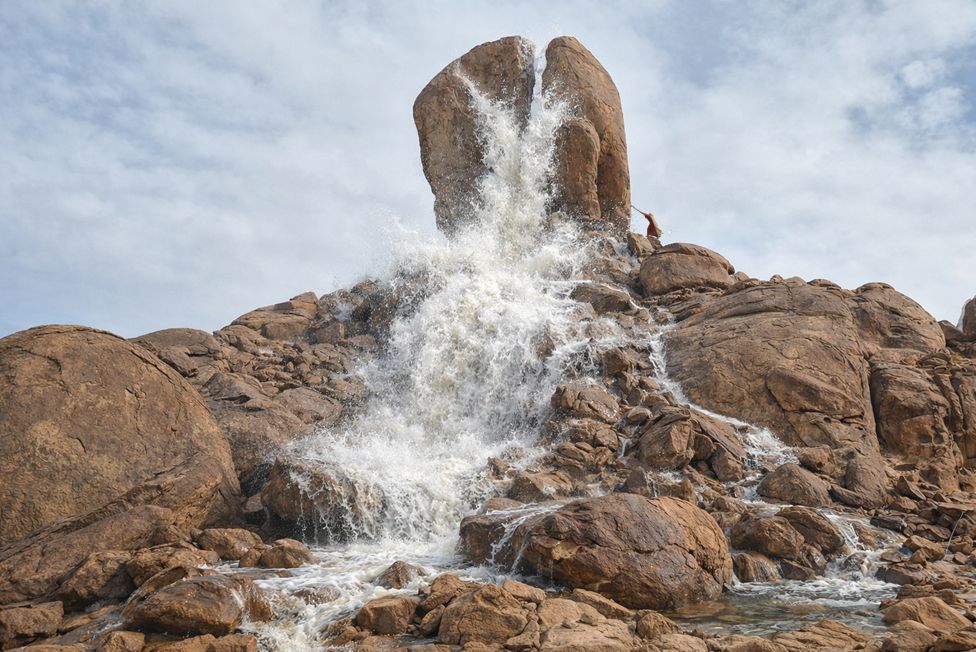
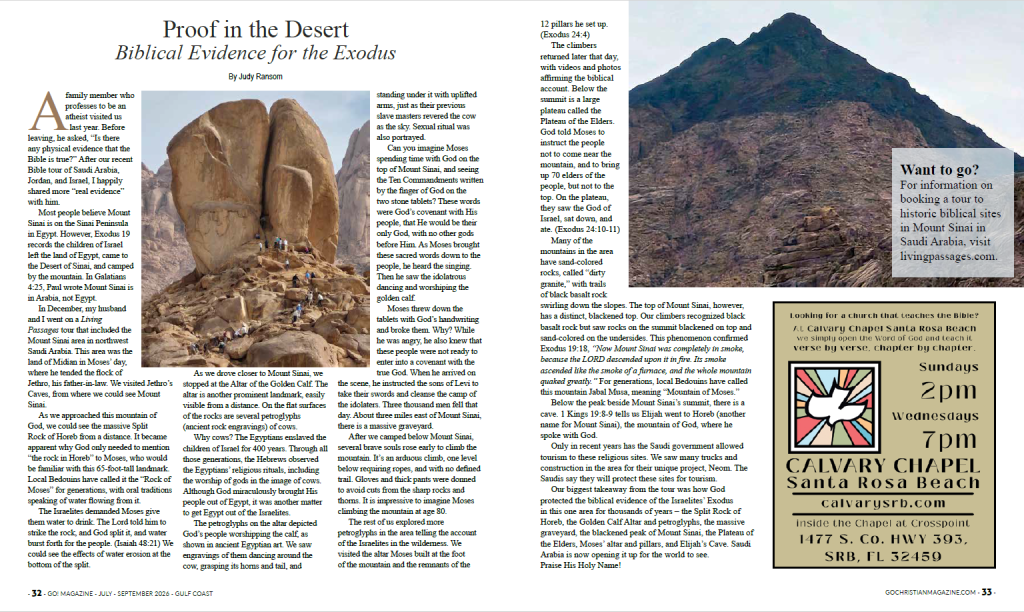
As we approached this mountain of God, we could see the massive Split Rock of Horeb from a distance. It became apparent why God only needed to mention “the rock in Horeb” to Moses, who would be familiar with this 65-foot-tall landmark. Local Bedouins have called it the “Rock of Moses” for generations, with oral traditions speaking of water flowing from it.
The Israelites had demanded that Moses give them water to drink. The Lord told him to strike the rock, and God split it, and water burst forth for the people. (Isaiah 48:21) We could see the effects of water erosion at the bottom of the split.
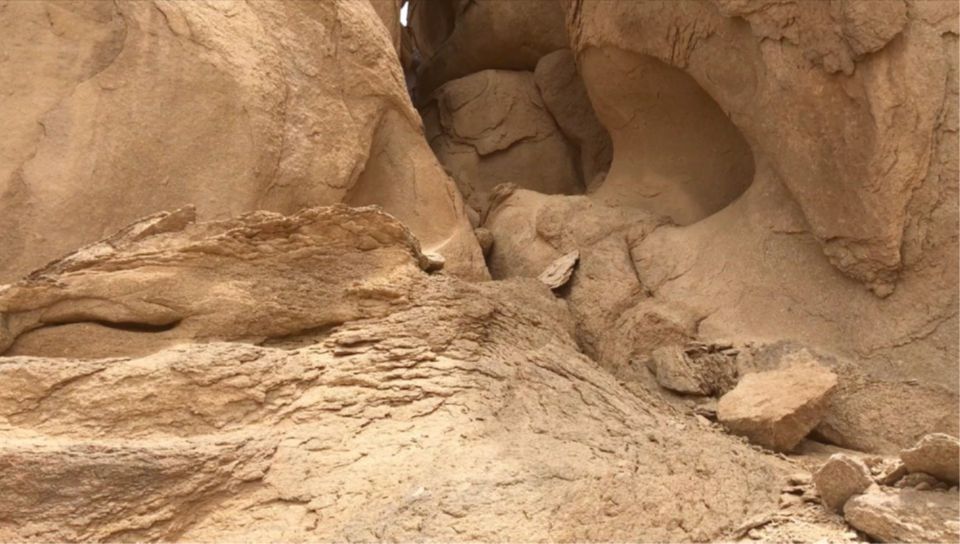
As we drove closer to Mount Sinai, we stopped at the Altar of the Golden Calf. The altar is another prominent landmark, easily visible from a distance. On the flat surfaces of the rocks are several petroglyphs (ancient rock engravings) of cows.
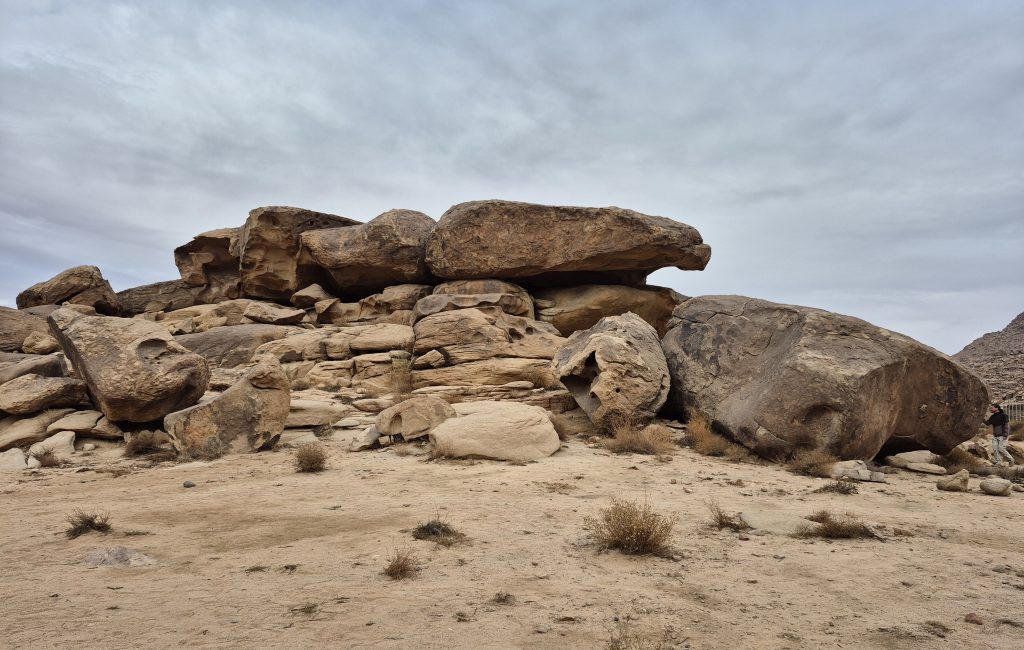
Why cows? The Egyptians enslaved the children of Israel for four hundred years. Through all those generations, the Hebrews observed the Egyptian’s religious rituals, which included the worship of gods in the image of cows. Although God miraculously brought His people out of Egypt, it was another matter to get Egypt out of the Israelites.
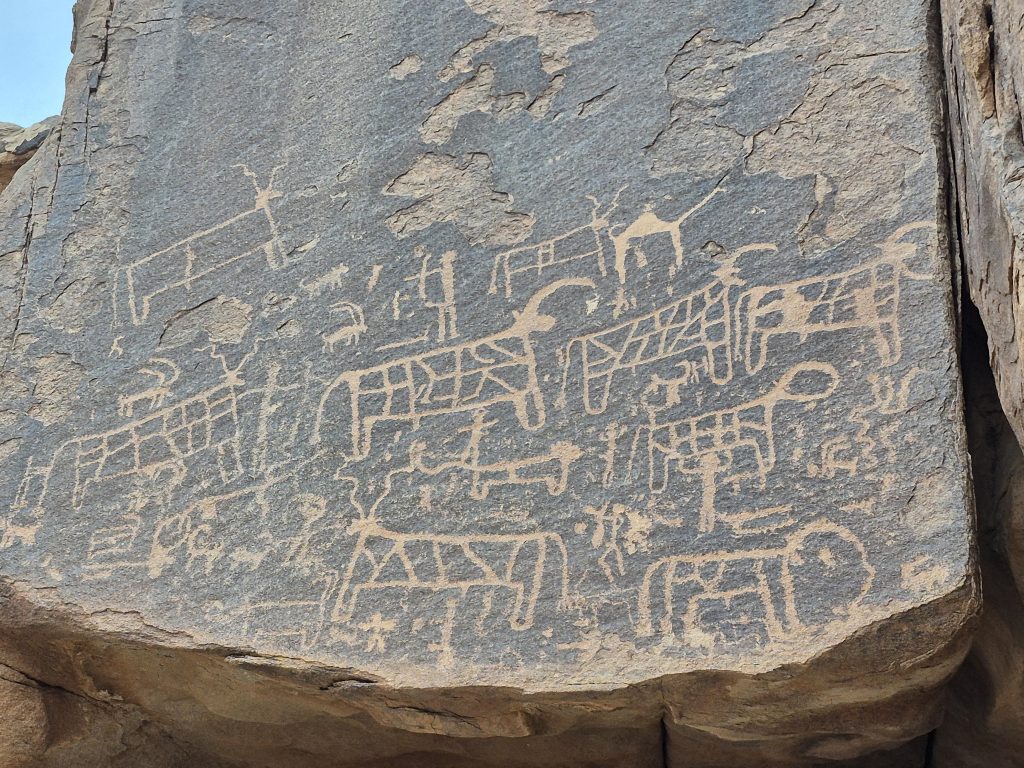
The petroglyphs on the altar depicted God’s people worshipping the calf, as shown in ancient Egyptian art. We saw engravings of them dancing around the cow, grasping its horns and tail, and standing under it with uplifted arms, just as their previous slave masters revered the cow as the sky. Sexual ritual was also portrayed.
Can you imagine Moses spending time with God on the top of Mount Sinai, and seeing the Ten Commandments written by the finger of God on the two stone tablets? These words were God’s covenant with His people, that He would be their only God, with no other gods before Him. As Moses brought these sacred words down to the people, he heard the singing. Then he saw the idolatrous dancing and fornication taking place in worship of the calf.
Moses threw down the tablets with God’s handwriting and broke them. Why? While he was angry, he also knew that these people were not ready to enter into a covenant with the true God. When he arrived on the scene, he instructed the sons of Levi to take their swords and cleanse the camp of the idolaters. Three thousand men fell that day. About three miles east of Mount Sinai, there is a massive graveyard.
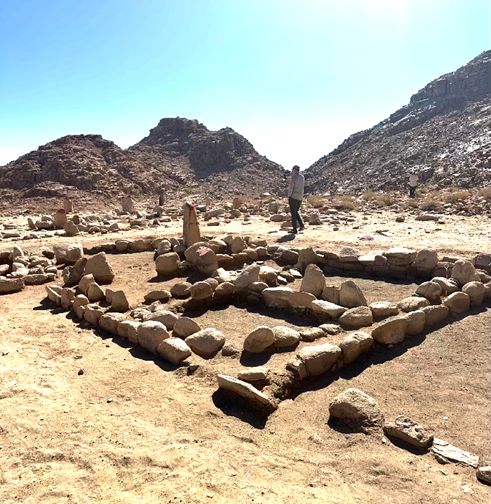
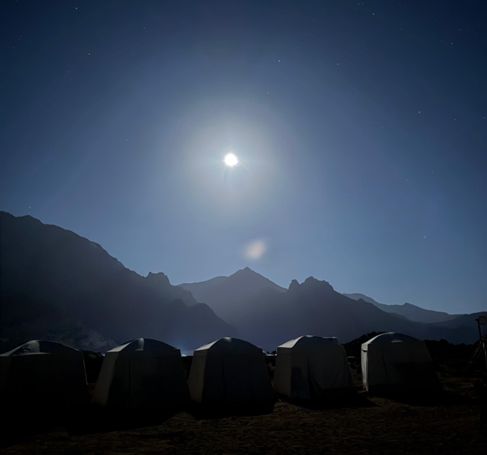
After we camped below Mount Sinai, several brave souls rose early to climb the mountain. It’s an arduous climb, one level below requiring ropes, and with no defined trail. Gloves and thick pants were donned to avoid cuts from the sharp rocks and thorns. It is impressive to imagine Moses climbing the mountain at age eighty.
The rest of us explored more petroglyphs in the area that told the story of the Israelites in the wilderness. We visited the altar Moses built at the foot of the mountain and the remnants of the twelve pillars he set up. (Exodus 24:4)
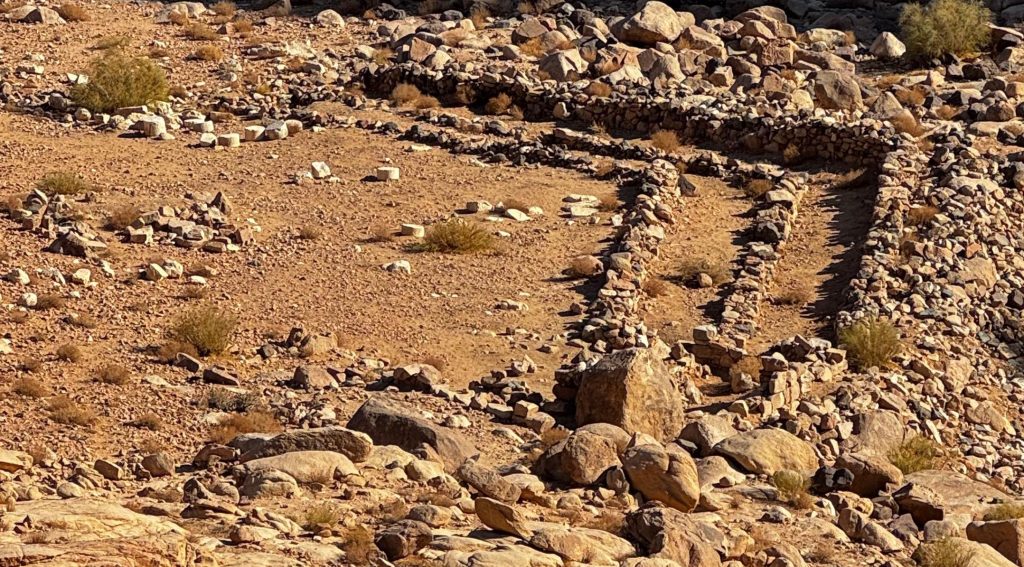
The climbers returned later that day, with videos and photos that affirmed the biblical account. Below the summit is a large plateau called the Plateau of the Elders. God told Moses to instruct the people not to come near the mountain, and to bring up 70 elders of the people, but not to the top. On the plateau, they saw the God of Israel, sat down, and ate. (Exodus 24:10-11)
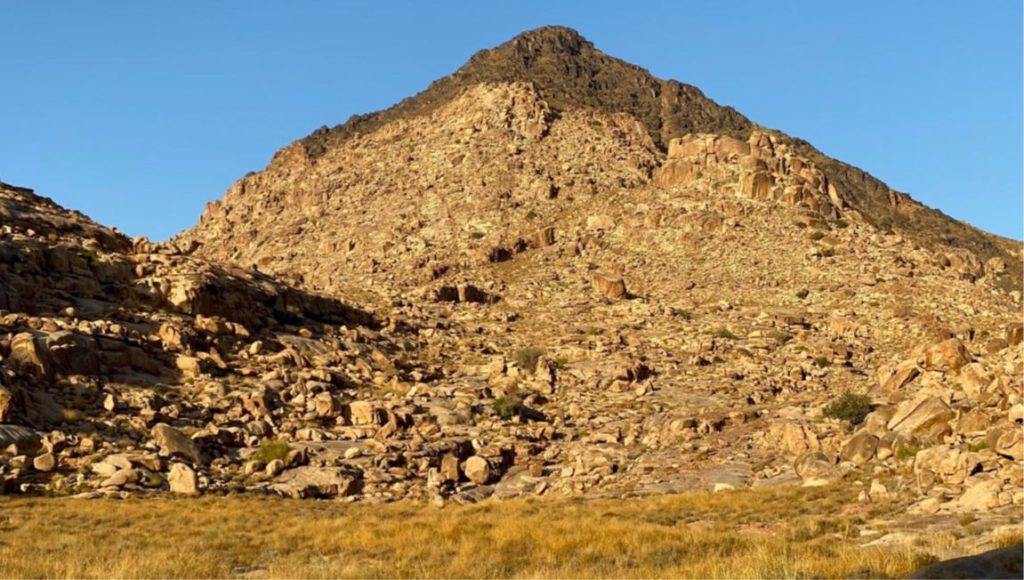
Many of the mountains in the area have sand-colored rocks, called “dirty granite,” with trails of black basalt rock swirling down the slopes. The top of Mount Sinai, however, has a distinct, blackened top. Our climbers recognized black basalt rock but saw rocks on the summit that were blackened on top and sand-colored on the undersides. This phenomenon confirmed Exodus 19:18, “Now Mount Sinai was completely in smoke, because the LORD descended upon it in fire. Its smoke ascended like the smoke of a furnace, and the whole mountain quaked greatly.” For generations, local Bedouins have called this mountain Jabal Musa, meaning “Mountain of Moses.”
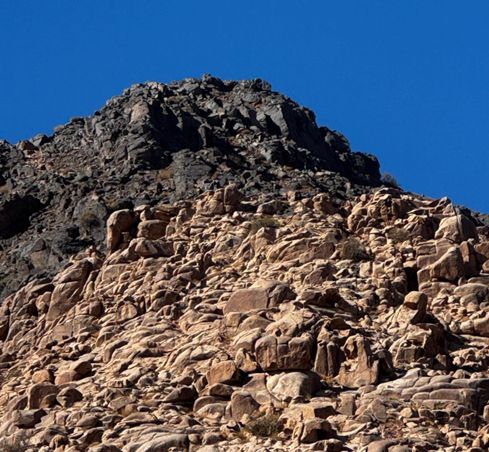
Below the peak beside the Mount Sinai summit, there is a cave. 1 Kings 19:8-9 tells us that Elijah went to Horeb (another name for Mount Sinai), the mountain of God, where he spoke with God.
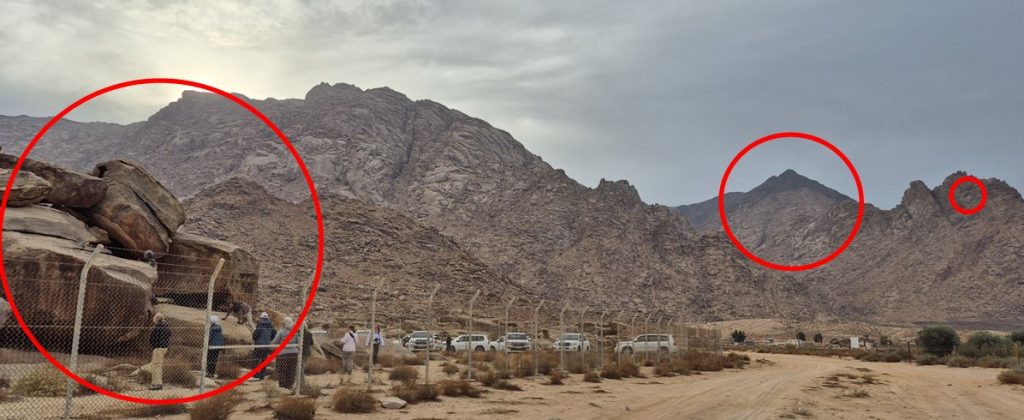
Only in recent years has the Saudi government allowed tourism to these religious sites. We saw many trucks and construction in the area for their unique project, Neom. The Saudis say that they will protect the religious sites for tourism.
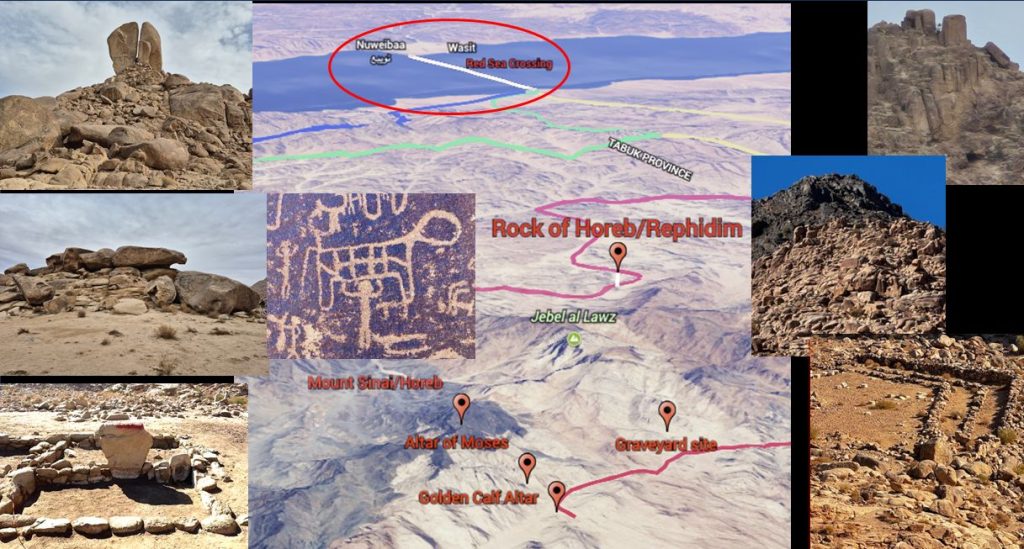
Our biggest takeaway from the tour was how God protected the biblical evidence of the Israelites’ Exodus in this one area for thousands of years – the Split Rock of Horeb, the Golden Calf Altar and petroglyphs, the massive graveyard, the blackened peak of Mount Sinai, the Plateau of the Elders, Moses’ altar and pillars, and Elijah’s Cave. Saudi Arabia is now opening it up for the world to see. Praise His Holy Name!
Videos of my Mount Sinai presentation:
- Part 1: https://photos.app.goo.gl/py5zkyT3pKCrm3QN7
- Part 2: https://photos.app.goo.gl/aL9myzXmW4HeDgv37
- Part 3: https://photos.app.goo.gl/M5h8Z1hC3gkv9x2G6